
Next Meeting: TUESDAY, May 12, 2026 at 7:15 p.m.
IN-PERSON AT THE POTOMAC LIBRARY!
If you are interested in more information about PFAS, or watching a video from our February 10th meeting, please click here.
SPEAKERS:
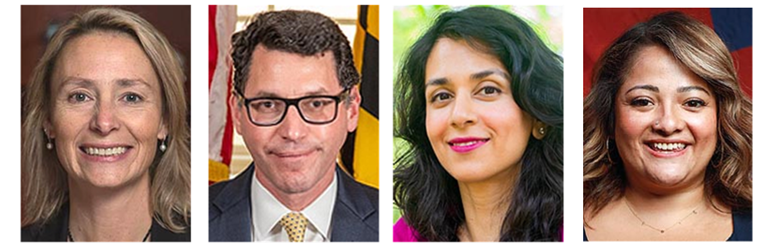
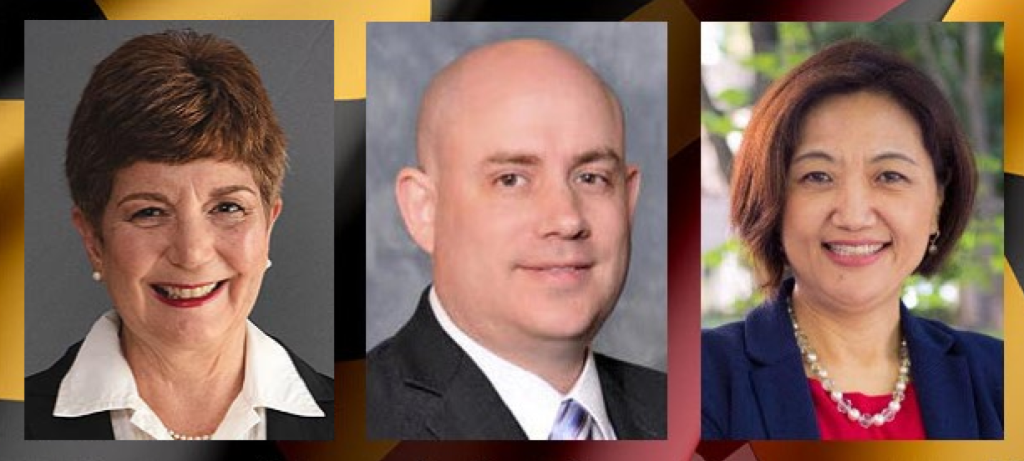
District 15: Delegates: Lily Qi, Linda Foley, and David Fraser-Hidalgo
District 16: Senator Sara Love and Delegates: Sara Wolek, Marc Korman and Teresa Woorman
As we do each year at the May General Meeting, we are delighted to host a panel of State Representatives who will share with us their accomplishments as well as some setbacks for this past legislative session in Annapolis. This year, we included lawmakers from both Districts 15 and 16, all of whom represent constituents in the Potomac subregion. As required by law, the state passed a balanced budget for fiscal year 2027 while facing a large projected shortfall that was exacerbated by the Trump administration’s huge federal spending cuts and the dismantling of several federal agencies which impacted tens of thousands of federal workers and contractors residing in Maryland.
As always, the public is welcome to attend!
Maryland Lawmakers Fight PFAs, Climate Change in 2025-’26
Submitted by Carol Van Dam Falk
District 16 Senator Sara Love has long been a proponent of protecting our environment, including combating climate change and reducing toxic chemicals. In 2026, Senator Love worked to pass Senate Bill 719-PFAS Mitigation, which establishes strict regulations for PFAS, known as “forever chemicals” in sewage sludge (biosolids) used on agricultural land containing harmful levels of per- and polyfluoroalkyl substances (PFAS). The legislation sets enforceable standards for testing and limiting PFAs that enter Maryland’s waterways. Love also worked to pass SB149, the Climate Change Adaptation and Mitigation Total Assessed Cost of Greenhouse Gas Emissions Study. The bill was enacted into law after the General Assembly voted to override Governor Wes Moore’s veto in December 2025. It directs the Comptroller and key state agencies to study and report the full cost of greenhouse gas emission in Maryland.
District 16 Delegate Marc Korman will continue under newly elected Speaker Joseline Peña-Melnyk as chair of the House Environment & Transportation (E&T) Committee, one of seven standing committees in the House of Delegates. In 2026, the E&T Committee worked diligently on a number of bills aimed at advancing energy affordability and sustainability.
District 16 Delegate Sara Wolek serves on the House Appropriations Committee covering education and economic development budget and policy issues. She is the Co-Chair of the Montgomery County House Democratic Caucus. In 2025, she worked to pass HB 910, the Property Tax Exemption for Blind Individuals. It increases the property tax exemption for blind persons and their surviving spouses from $15,000 to $40,000.
District 16 Delegate Teresa Woorman served on the Health Committee and Subcommittee on Elder and Long-Term Care, Maternal and Infant Health, and Public Health in 2026. Two of Woorman’s bills to protect immigrants passed and await the Governor’s signature to become law:
HB963 removes an outdated barrier in our estates law governing the appointment of personal representatives so family members can manage a loved one’s estate regardless of their citizenship status.
HB1530 makes higher education more accessible by reducing the number of years of tax documentation undocumented students must provide to be eligible for in-state tuition, while still maintaining accountability.
District 15 Delegate Linda Foley serves on the House Environmental & Transportation Committee. Appointed in late 2021 to finish out the term of former Delegate Kathleen Dumais, who was appointed to the Circuit Court bench. Foley was since elected to a full term. She became Montgomery County Delegation Caucus Chair in 2023 and has focused on legislation to protect our environment, fight climate change, and improve public transit. Foley also fights for the rights of all Marylanders to have the freedom to make choices about their bodies.
District 15 Delegate Lily Qi focused on economic development, technology regulation and environmental concerns in 2025. She sponsored HB1360 – Road Salt Outdoor Storage, which prohibits leaving road salt uncovered. Unfortunately, the bill failed to pass.
District 15 Delegate David Fraser-Hildalgo focused on energy, transportation, and consumer protection, including key bills regarding electric vehicle (EV) rebates (HB0216), solar on brownfields (HB1111), and auto insurance affordability studies. His 2025 work also included legislation on climate adaptation, and school phone policies.
AI, Cell Towers, and Data Centers
Submitted by Theodora Scarato
Data Center Health Risks: Data Centers pose significant health and environmental risks by contributing to air pollution from their fossil fuel energy use and diesel backup generators, using vast amounts of water for cooling, and degrading water quality through discharge of contaminated wastewater. They can increase PFAS (forever chemicals), which can persist in water supplies and bioaccumulate, increase EMF exposure from expanding electrical infrastructure, and generate constant light and noise pollution from 24/7 operations, impacting human and wildlife health. There are minimal health-based regulations in place for Data Centers in Montgomery County.
The whole House has recently issued executive orders to accelerate AI development and “promote the rapid build out of data centers” by deregulating and preempting local governments. The EPA is rolling back air pollution safeguards and expediting review of data center chemicals.
Cell Towers: At the same time, Congressional and FCC proposals aim to fast-track cell tower deployment by preempting state and local control over cell tower siting and permitting, with industry groups arguing these measures are necessary to support AI expansion. Published research has linked cell towers to health impacts, from cancer to sleep problems. While House Bill H.R. 2289 has been stalled, its sponsors are “confident” it will be successfully resurrected. The FCC, with just three unelected commissioners, is poised to move forward with Docket No. 25-276, which would strip local control. Montgomery County filed comments alongside major organizations representing Cities and towns nationwide in opposition to the FCC proceeding. Action Alert at Environmental Health Sciences.
Data Center ZTA 26-01 Update: Amendments to address water and climate impacts have been proposed for ZTA 26-01 (allowing data centers in industrial zones with a 500-foot setback), including requirements for a water use plan to minimize consumption and prohibit potable water for cooling, as well as a carbon compliance plan demonstrating 100% clean energy use.
Late breaking update: Councilmember Evan Glass is introducing legislation establishing a pause on permits for data centers for six months.
Stay updated with the Montgomery Countryside Alliance and sign their Action Alert about risks to our water supply from Data Centers.
Proposed MCPS Bus Depot in Special Protection Area (SPA)
Submitted by Ginny Barnes
On April 14, 2026 the County Council voted to approve a bus depot at the corner of Shady Grove Road and Cavanaugh Drive on a 12+ acre forest. There was no public notice of MCPS’s designation of the site as a bus depot. MCPS did not hold public hearings or meet with the community. Other budget documents avoid any direct mention of this property. Despite the lack of notice, MCPS has approved this site in its current CIP budget. The County Council concluded its budget hearings, including this proposal, long before the public even learned of it. The vote was 7-4. The 4 Council Members who voted to eliminate the Bus Depot from the CIP were Andrew Friedson, Evan Glass, Sidney Katz, and Marilyn Balcombe.
This site is part of the upper Piney Branch watershed designated a Special Protection Area (SPA). SPAs are areas of unusually sensitive water resources (i.e., high-quality streams, sensitive wetlands, steep slopes, and soils prone to erosion) and other environmental features and where those resources are threatened by land use changes (such as development) unless extraordinary or special protective measures are taken. The 12.1 acre site is heavily forested and considered part of a Priority Urban Forest as designated by Maryland’s Department of Natural Resources. A bus depot would require extensive, if not total, clear-cutting. For 20+ years, the community has been led to believe (via signage at the site) that this would be the home of a future school.

Piney Branch Special Protection Area (SPA) was established in 1994. This SPA includes the Serpentine Barrens Conservation Park South Unit. Serpentine communities are considered one of the State’s rarest natural resources, and one of the most unusual sets of natural communities in the eastern North America temperate forest region. WMCCA was instrumental in the extensive process that led to SPA designation for Piney Branch. There are only 4 such sensitive watersheds in Montgomery County. The largest and most well-known SPA is in the Ten Mile Creek watershed. The need to protect water quality in these high-quality streams led to creating extraordinary standards for any development, including placing severe limits on impervious surface levels. A 12+ acre parking lot replacing dense forest does not fall within these water quality protection standards. In fact, it is a complete violation of standards for our drinking water supplies.
WMCCA finds it hard to believe the County Council was unaware of the water quality standards applied to this portion of Piney Branch. The County Council approved all SPAs and created policies applicable to them. What is the sense of making policy that is not followed? WMCCA supports issues raised by adjacent civic associations but we believe the SPA status overrides all other concerns. We have written the Council to oppose the decision. During the reconciliation process, the Council will have an opportunity to right this egregious decision. We are working to remove the bus depot proposal from the budget.
WSSC Studies the Travilah Quarry
Submitted by Ginny Barnes
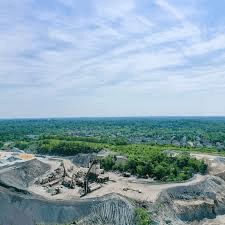
The May meeting of the Civic Federation had the Washington Suburban Sanitary Commission (WSSC) as guest Speakers. In their extensive presentation there were several revelations. One of which is crucial to our area – we are running out of drinking water to sustain the region over the next 10 years. In response, WSSC is actively studying the Travilah Quarry for use as a drinking water reservoir. This would likely involve substantial piping and a liner. The rock quarried there is serpentinite, containing minerals chemically challenging for plants which gives rise to unique species specifically adapted to be slow-growing and tolerant of stress due to the unique shallow and nutrient poor soil in this area. This serpentine habitat also contains unique tree specimens, which while quite old – are stunted.
Glen Road Bridge Replacement over Sandy Branch
Submitted by Ginny Barnes
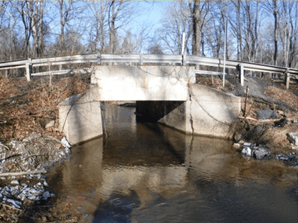
A hearing will be held at the Planning Board on May 7, 2026 to consider a Mandatory Referral to replace the bridge over the Sandy Branch stream. Glen Road is a Rustic Road and this proposal includes a good deal of infrastructure such as box culverts, wingwalls, and rip rap (stone and concrete fragments). Our concern is whether the bridge proposed is more than needed considering the road status. Rustic Roads are intended to have minimal interference of structures and disturbance to roadside vegetation. Planning Staff worked with the Rustic Roads Advisory Committee and Glenstone Museum to design the replacement. They did not include public input on the project.
IN-PERSON WMCCA Meeting April 14, 2026 – 7:15 p.m.

West Montgomery County Citizens Association Newsletter
P.O. Box 59335, Potomac, MD 20854-9335
President – Carol Van Dam Falk: President@WMCCA.org
Website: WMCCA.org – Thomas Fahey
Newsletter Editor – Nancy Madden
 West Montgomery County Citizens Association