
JOIN US FOR OUR NEXT MEETING!
TUESDAY, FEBRUARY 11TH, 2025 at 7:15 p.m.
IN-PERSON MEETING MEETING MOVED ONLINE TO ZOOM DUE TO WINTER STORM FORECAST !
Click below to view a recording of the February 11 Meeting.
https://us02web.zoom.us/rec/share/1Ru0gWTfv2dmkh96FnP0b8nFnOvM7NGhKx9r18AT4kVRKSzUlIVhbKJ1_fa15q8J.WRMSMEXKONSVW6B_
Passcode: 48y5m+fW
Click here to view pdf of presentation.
SPEAKERS: From the Montgomery County Department of Environmental Protection (DEP):


Monitoring the quality of our watersheds is critical to stormwater management, pollution threats, and providing clean drinking water. Montgomery County Department of Environmental Protection (DEP) has a number of assessment tools to gauge the many parameters utilized to read our streams. From in-stream water quality monitoring to recent technologies like LiDAR (Light Detection And Ranging) technology. Our speakers will present an overview of the processes used to determine stream, wetland, and watershed conditions.
As always, the public is welcome to attend!
Watershed Assessment – Processes and Goals
President’s Letter by Ginny Barnes
Everyone in Montgomery County who receives a property tax bill pays a stormwater charge. We now live in a built environment with significant impervious surfaces such as roads, buildings, driveways, and parking lots. When it rains, water runs off of these surfaces carrying pollutants into nearby waterways. Streams and rivers are the low points in any landscape, so gravity operates as the conductor of stormwater. In hot weather, these impervious surfaces increase the temperature of runoff. In winter, the runoff carries salt used to de-ice snowfall. Temperature and salt are both pollutants, extremely harmful to aquatic organisms. Development creates erosion, another pollutant. This is why silt fences are erected around building sites. The removal of trees and forest adds more soil erosion to waters entering streams.
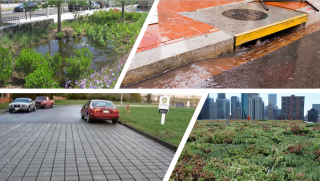
To combat the harmful effects of all this runoff, impediments are created to capture runoff and hold it, allowing pollutants to settle before water enters nearby streams. These facilities must be maintained. Some of them are temporary while construction proceeds, and some are permanent structures. To pay for maintenance, Montgomery County created a stormwater tax. I served on the task force set up by Ike Leggett (when he was a Council member) that recommended this tax as the path to providing funding back in early 2000’s. It was a tough sell at first but became the solution after many months of lively debate.
The assessment process includes monitoring temperatures, and the climate crisis brings new challenges. Land use and land cover as the county grows make it more difficult to keep streams clear of pollutants. Increasing forest cover is essential to reducing runoff. We rely on our streams for clean drinking water. The WSSC Water filtration plant on River Road takes the water from the Watts Branch stream and treats it to provide for 3 jurisdictions. Public awareness is part of the monitoring process. DEP has developed a form citizens can use to report conditions in need of attention in their local streams. We are all responsible for the health of our watersheds.
When Snow and Ice Come, Be Salt Smart
(By Glenda C. Booth – Reprinted with permission from the Potomac Almanac)
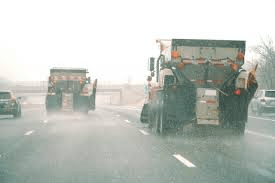
This week’s snowstorm not only brought a winter wonderland and slippery conditions, it also brought salt. Many homeowners and building, parking lot and highway managers apply salt to prevent ice from forming on pavement.
Salt Levels Rising – “Chloride concentrations in the Potomac River have risen substantially in recent decades,” says the Interstate Commission on the Potomac River Basin, stressing that the river is a drinking water source for about 6.89 million people. Average winter concentrations have jumped almost ten-fold, the commission contends. Salt flowing off impervious surfaces is a major contributing factor. Over the past 30 years, salt has increased 104 percent in the Potomac River, reports the WSSC, the water utility for Maryland’s Montgomery and Prince George’s counties.
“Salt levels in the Potomac River and Occoquan Reservoir … have risen noticeably over the past decades, with average concentrations more than doubling,” reports the Northern Virginia Regional Commission. The reservoir is also a drinking water source for two million Northern Virginians.
“Deicing salt applied to areas such as roads, sidewalks and driveways is a major source of chloride in developed areas surrounding the upper Accotink Creek,” a 2021 study by Wetland Studies and Solutions found, noting that “tracked concentrations spike in the winter months.” Other Northern Virginia streams likely have similar conditions, Virginia Department of Environmental Quality officials maintained at that time.
Safer Driving, but Some Harms – Highway managers apply salt to enhance driving safety. Salt can reduce vehicle crashes by 88 to 95 percent, reports the Northern Virginia Regional Commission. While modern mobility may require de-icing pavements, salt has some downsides.
To read the full article: https://www.potomacalmanac.com/news/2025/jan/08/when-snow-and-ice-come-be-salt-smart/
Why It’s Important to Protect the Potomac River
Submitted by Barbara Hoover
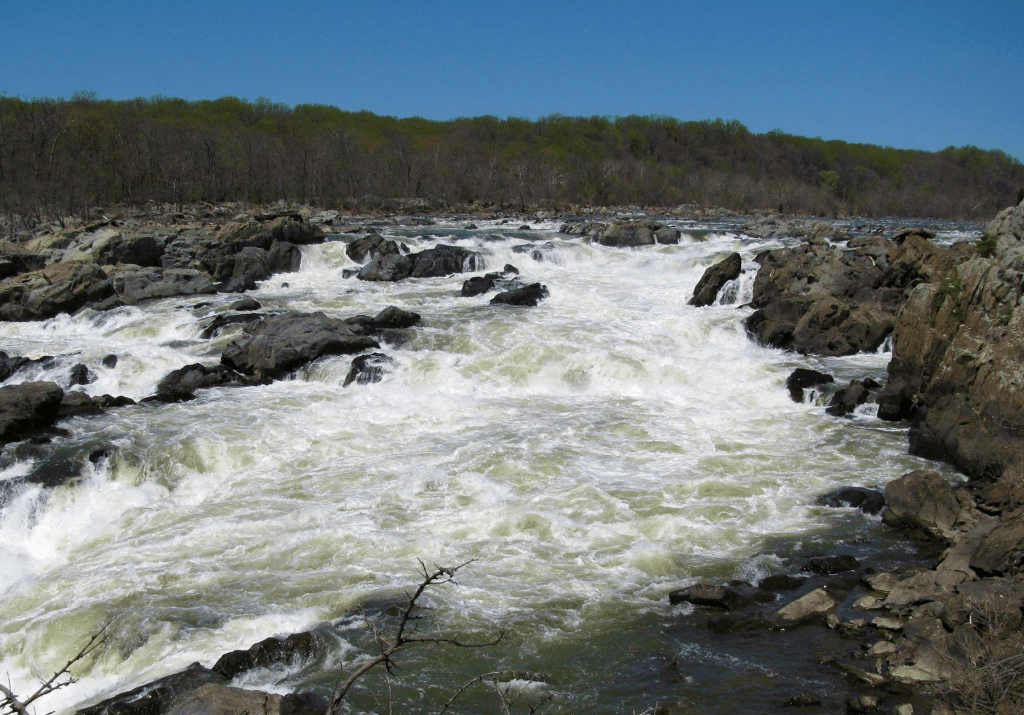
The Potomac River supplies 78 percent of the drinking water for the more than 5.1 million people who live and work in the DC Metro area – not to mention the countless daily visitors,” said Michael Nardolilli, Executive Director of the Interstate Commission on the Potomac River Basin (ICPRB).
Public water treatment plants treat approximately 83 percent of the Potomac basin’s wastewater. Another 16 percent is treated by private septic systems. An average of approximately 486 million gallons of water is withdrawn daily in the Washington area for water supply.
Approximately 100 million gallons per day of groundwater is used in rural areas. Almost 86 percent of the basin’s population receives its drinking water from public water suppliers while 13 percent uses well water (ICPRB Website).
According to current information, the Washington Metropolitan Area is not expected to “run out” of water in the near future, but studies suggest that if current water usage trends continue, the area could face significant water supply challenges by 2040 due to increasing demand and potential impacts of climate change on the Potomac River.
Update on Attainable Housing Initiative
Submitted by Ginny Barnes
Last October, we had a presentation on the Attainable Housing Initiative (AHI) submitted by the Planning Commission to the County Council over the summer. A wildly unpopular proposal, it received countywide criticism from the public, citizen and environmental groups. The Council appeared unwilling to introduce legislation on such a radical proposal. We knew they would not just drop it. So, six members of the Council have announced intentions to introduce a scaled down ZTA to foster more and denser housing along corridors throughout the county.
The proposal highlights the need for workforce housing, down payment assistance programs, and incentives to convert office space to residential space. Called Workforce Housing N.O.W. by two original sponsors: Councilmembers Natali Fani-Gonzalez (District 6) and Andrew Friedson (District 1), it also goes by Workforce Housing ZTA and will allow more residential building types along corridors with a workforce housing requirement. A summary of the ZTA can be found on the following link:
Https://docs.google.com/document/d/10fhpjRwjNk3zFSpxbVt7dUnD4tCqDvBMm6zaKjfy5HU/edit?usp=sharing

WMCCA is monitoring this proposal and the potential timeline for enactment and thanks the Montgomery County Civic Federation (of which we are a member) for acting quickly to critique and offer ideas to the County Council. Converting unused office space to needed housing was one of those suggestions

Go Green – Go Paperless! Let us know if you are willing to go paperless. Our electronic newlettters save the expense of rising postage and printing costs. Thank you! Please email: hooverb@msn.com.
West Montgomery County Citizens Association Newsletter
P.O. Box 59335, Potomac, MD 20854-9335
President – Ginny Barnes: President@WMCCA.org
Website: WMCCA.org – Thomas Fahey, Newsletter Editor – Nancy Madden
 West Montgomery County Citizens Association